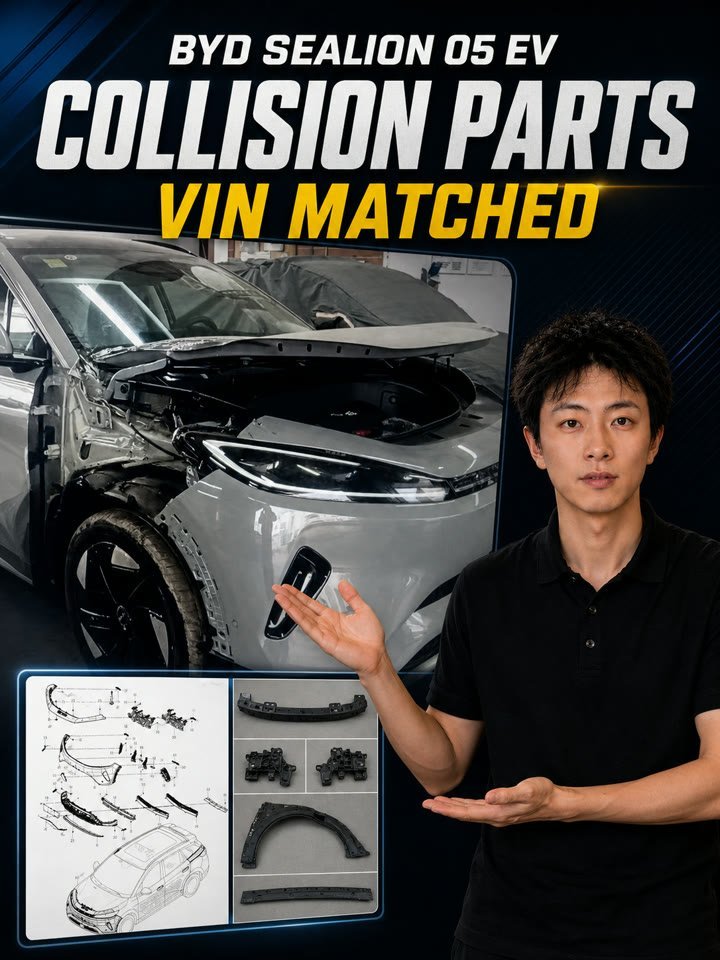
The visible damage is not the complete repair scope
A damaged bumper may be the first thing a buyer sees, but a serious front collision can reach much farther. The material for this Colombia case includes one real damage photograph and a 34-line parts record covering exterior panels, structural parts, wiring, radar, parking sensors, lamps, wheels, dampers, stabilizer components and steering equipment.
That record defines an area to investigate and source; it does not prove that every listed component was finally replaced. A parts list is also not a completed diagnosis. The workshop must still confirm which items are damaged, reusable or required for safe reassembly.
Why the VIN must come before the order
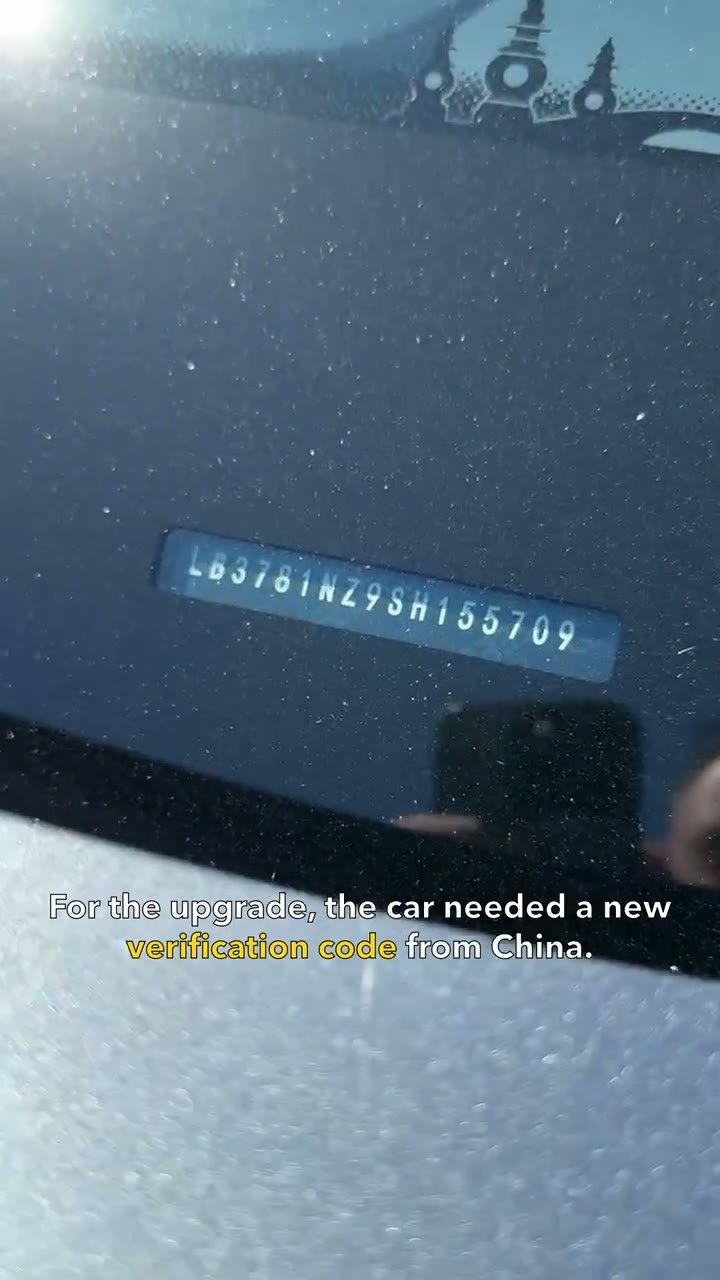
A model name alone is not precise enough for collision-parts purchasing. The same model can use different components across production batches, specifications or supplier changes. Parts may look similar in a catalogue and still differ in connector, bracket, software compatibility or calibration requirement.
The practical sequence is vehicle identification first, parts-code matching second and purchasing third. Share the VIN through a private channel and mask it in public posts. The supplier should return a written match against the identified vehicle rather than relying only on a photograph or an English model name.
Separate parts matching from safety verification
Correct parts are necessary, but they do not by themselves prove that an EV is safe to return to the road. Depending on the impact, the repair plan may require high-voltage battery insulation checks, airbag-system review, body measurement, steering and suspension inspection, ADAS calibration and a controlled road test.
The available case material does not include completed reports for those checks or photographs of the repaired vehicle. For that reason, this article documents the parts-identification and planning stage only. Final safety decisions belong to qualified technicians using the repaired vehicle and appropriate equipment.
Build a usable request for a China parts supplier
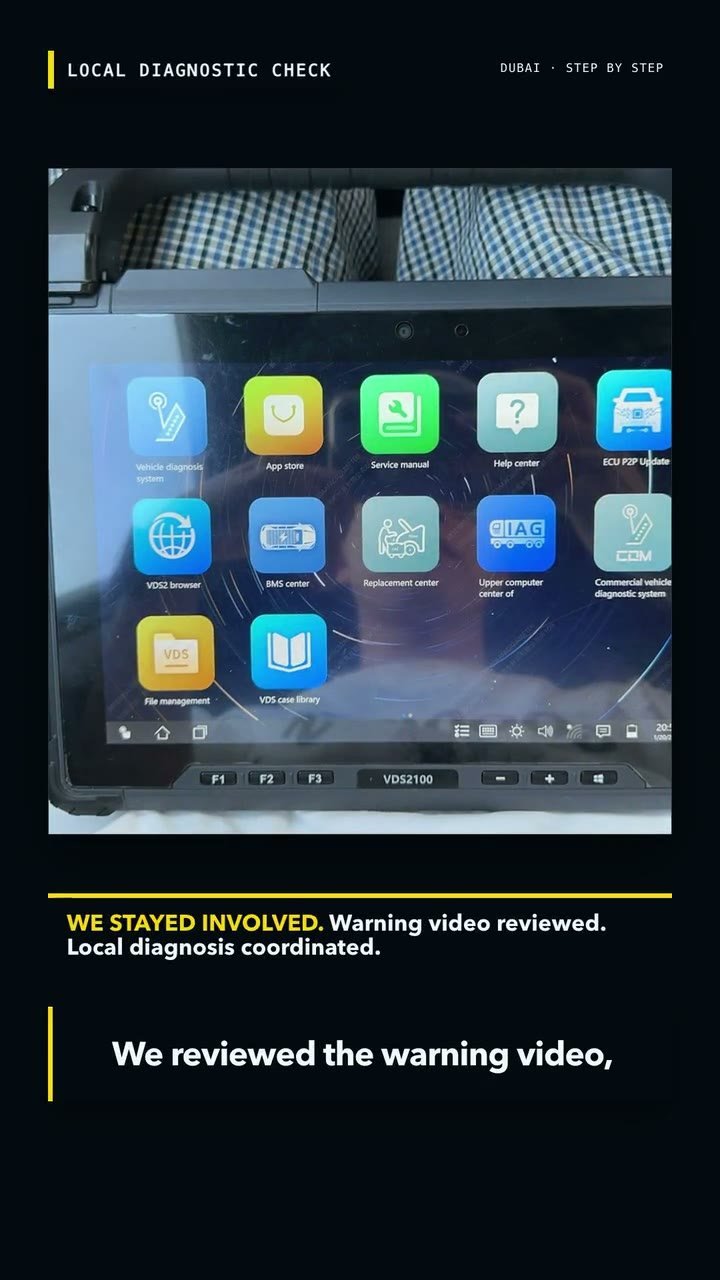
Start with the exact model, masked VIN, destination country and clear damage photographs. Add the diagnostic report, existing parts list and close-ups of connectors or labels when available. State whether the vehicle can power on, whether warning messages are present and which systems have already been inspected.
Ask the supplier to distinguish confirmed matches, alternatives that require checking and items outside its scope. The quotation should identify part numbers, quantity, condition, included accessories and shipping basis. This makes technical questions visible before money moves.
Keep a traceable repair file
Keep the original damage record, VIN match, quotation, packing list, installation evidence and test reports together. If the repair involves structural or safety-critical systems, retain the workshop measurements and calibration results for the owner, fleet manager or future buyer.
Turn the repair request into an auditable parts package
A useful request separates identification, diagnosis and purchasing. The identification file contains the masked VIN, model year, trim and market version. The diagnosis file contains wide damage photographs, close-ups, scan reports and workshop measurements. The purchasing file converts confirmed needs into part numbers, quantities, condition, included clips or brackets and acceptable alternatives. Keeping the three layers separate makes it clear which statement came from the vehicle, which came from the technician and which came from the supplier.
Before payment, ask the supplier to mark every line as confirmed, pending verification or unavailable. After receipt, compare labels and connectors before installation and preserve packaging until the workshop accepts the parts. For structural, steering, restraint, high-voltage or driver-assistance components, the final decision must remain with a qualified repair facility. A correct catalogue match supports purchasing; it is not a certificate that the repaired vehicle is safe.